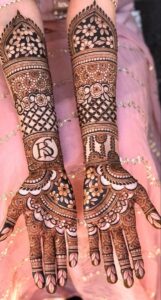
Trending Engagement Mehndi Designs for Modern Brides
An engagement is one of those beautiful occasions that sits between anticipation and celebration. You have the ring, the outfit, the jewellery, the photographs, and suddenly every little detail feels important. Engagement mehndi has also become an increasingly stylish part of this celebration, especially for brides who want to express their personality before the wedding day arrives. Unlike traditional wedding mehndi, which can be extremely detailed and cover large areas of the hands and feet, engagement mehndi often focuses on elegance, comfort, personalization, and photographs. Current 2026 mehndi trends show a clear interest in negative space, personalized storytelling, floral motifs, geometric details, bracelet-style patterns, and Arabic or Indo-Arabic layouts. The result is a fresh approach that feels festive without looking overly heavy. So, whether you are a bride who loves delicate flowers, a romantic who wants initials hidden inside the design, or someone who wants a bold Arabic trail for a glamorous ring ceremony, there is a design waiting for you. The best part? Modern engagement mehndi does not force you to choose between tradition and contemporary fashion; it lets you combine both. Think of it as wearing your love story as jewellery—only this jewellery is drawn by hand and becomes part of your memories.
Why Engagement Mehndi Is Becoming a Modern Bridal Statement
For many brides, engagement mehndi is no longer simply an extra decoration for the ceremony. It has become a carefully considered element of the overall bridal look, much like earrings, nail art, makeup, or the engagement ring itself. Modern brides are increasingly looking for designs that complement rather than compete with their outfit and jewellery. This is one reason lighter and more strategically placed patterns have become attractive for engagement ceremonies. Many 2026 trend reports highlight the popularity of designs with clean negative space, statement motifs, delicate wrist bands, and details that look particularly attractive in close-up photographs. Imagine your photographer capturing the moment your partner slips the ring onto your finger: instead of a crowded pattern hiding every part of your hand, a thoughtfully designed motif can frame the ring and make the photograph feel intentional. This approach also gives brides more freedom to choose unusual elements, such as a single lotus, a floral vine, geometric framing, initials, a date, or a tiny symbol connected to their relationship. Engagement mehndi therefore works almost like a fashion accessory. It adds texture, personality, and tradition while still allowing the bride’s outfit, manicure, and ring to remain visible.
The Shift Toward Personalized Mehndi
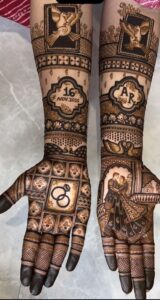
Personalization is one of the strongest directions in modern bridal mehndi. Rather than selecting a design simply because it looks attractive in a catalogue, brides can now ask their mehndi artists to create patterns around their own relationship, interests, and engagement story. A couple’s initials can be incorporated into a floral composition, a meaningful date can be hidden within fine detailing, or a small symbol can represent a shared memory. Some designs even feature miniature romantic scenes, ring motifs, hearts, infinity symbols, or subtle references to the couple’s journey. Current engagement mehndi inspiration increasingly emphasizes storytelling and individuality rather than following one rigid traditional template. This makes personalized mehndi particularly special because two brides can choose the same general style while ending up with completely different artwork. If you want something sophisticated, personalization does not have to mean filling your hands with names and dates. A single initial tucked inside a flower can be enough. Similarly, a tiny symbol near the wrist may carry more emotional meaning than an entire page of decorative patterns. The goal is to make your engagement mehndi design feel like yours—not simply like something copied from a social media post.
Top Engagement Mehndi Trends for 2026
The 2026 engagement mehndi scene is wonderfully diverse, which means modern brides have plenty of room to experiment. Traditional Indian motifs remain popular, but they are being combined with cleaner layouts, larger statement flowers, open skin, geometric structures, jewellery-inspired details, and personalized elements. Manyavar’s 2026 trend coverage specifically points toward personalized storytelling, smart use of empty space, region-inspired motifs, geometric grids, bracelet-style bands, and tiny couple-specific symbols. Arabic and Indo-Arabic designs are also particularly suitable for brides who want something expressive without committing to full-hand coverage. The beauty of these trends is that they can be adjusted according to your ceremony. A daytime engagement may suit a soft floral pattern, while an evening ring ceremony can support darker, bolder artwork. You can also combine styles: perhaps an Arabic floral trail on the back of one hand with a small mandala on the palm, or a jewellery-inspired wrist cuff with delicate fingers. Modern mehndi is less about following rules and more about creating balance. The strongest design is usually the one that looks intentional from a distance, detailed when photographed closely, and comfortable enough for you to enjoy your special day.
Minimalist Mehndi Designs
Minimalist mehndi has become a favorite for brides who love elegance without excessive detailing. Instead of covering the entire palm and fingers, minimalist designs concentrate attention on one or two focal elements. You might choose a small mandala in the center of the palm, a delicate vine moving toward the wrist, a single floral motif on the back of the hand, or a fine bracelet pattern around the wrist. The surrounding skin remains visible, creating contrast that makes the artwork look more refined. Current 2026 inspiration describes minimal designs as an important part of the modern bridal aesthetic, particularly for brides who want clean palms, strategic negative space, and statement motifs rather than dense coverage. This style is also practical for engagement ceremonies because you are often expected to pose with your ring, hold a bouquet, greet guests, and participate in photographs. Heavy mehndi can sometimes make those moments feel cumbersome, whereas a lighter design keeps your hands visually elegant and easier to manage. Minimalism does not mean boring. A skilled artist can create remarkable depth using a few precise lines, small leaves, fine dots, and controlled spacing. In fact, when there are fewer elements, every line becomes more noticeable, so neat application matters enormously.
Arabic Floral Mehndi
If you want your engagement mehndi to look bold, feminine, and effortlessly fashionable, Arabic floral mehndi is an excellent option. Arabic designs are known for flowing compositions, large flowers, leafy vines, diagonal movement, and generous areas of untouched skin. Instead of creating a dense pattern across the entire hand, the artist allows individual motifs to breathe. This gives the design a graceful movement that can visually lengthen the hand and work beautifully with contemporary jewellery. Current mehndi guides continue to identify Arabic and simple Arabic patterns as major choices for modern brides, especially because they combine traditional henna aesthetics with a lighter, more uncluttered appearance. For an engagement, you could choose a large rose beginning near the wrist and flowing diagonally toward the fingers, or a series of leaves and smaller flowers leading toward the ring finger. Shading inside petals can add dimension without requiring dense filler work. Pair this design with a sleek saree, pastel lehenga, contemporary blouse, or statement jewellery, and the result can feel remarkably polished. Arabic mehndi is especially attractive when you want your ring to remain visible because the open spaces naturally draw attention toward the hand’s focal points.
Indo-Arabic Fusion Designs
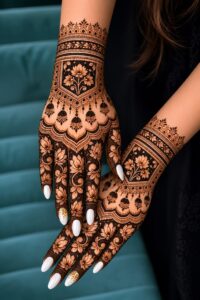
Why choose between Indian intricacy and Arabic elegance when you can combine both? Indo-Arabic mehndi brings together the flowing structure of Arabic patterns with the detailed elements associated with Indian henna. You might see bold roses and leafy trails alongside paisleys, jaali work, delicate fillers, or fine finger detailing. The result is richer than a simple Arabic design but generally more open and airy than traditional full bridal mehndi. Current 2026 bridal trends describe this fusion approach as a strong option for brides who want both tradition and modernity. This style is especially versatile because your artist can control the amount of coverage. If you prefer a lighter engagement look, large flowers can be surrounded by open skin. If you want something more festive, fine Indian fillers can be introduced around the main motifs. Indo-Arabic designs also work beautifully on the back of the hand because diagonal trails naturally create movement. You could even customize one flower with your initials or add a tiny engagement ring symbol to make the design unique. The secret is balance: let the Arabic structure create breathing room while Indian details provide the intricate character that makes mehndi feel unmistakably festive.
Romantic Designs for the Engagement Ceremony
Engagement ceremonies are naturally romantic, so why shouldn’t your mehndi reflect that mood? Romantic engagement mehndi designs can include flowers, hearts, initials, couple silhouettes, ring motifs, love symbols, or tiny illustrations representing meaningful moments. Unlike wedding mehndi, where brides often choose elaborate traditional scenes, engagement designs can be more subtle and personal. A small couple motif exchanging rings, for example, can sit inside a floral frame without taking over the entire hand. Similarly, initials can be woven into vines rather than displayed as obvious lettering. Contemporary engagement mehndi inspiration frequently highlights personalized initials, names, ring-related motifs, and storytelling as ways to make the artwork emotionally meaningful. This approach works particularly well in photographs because your hands naturally become part of the story during ring-exchange moments. When choosing a romantic design, think about what you want to remember years from now. Would you smile at your initials hidden inside a flower? Would a small illustration of your first meeting make you laugh? Would your engagement date tucked into a bracelet pattern become a beautiful secret? These tiny choices can transform ordinary henna into a visual memory of your relationship.
Couple Initials and Name Mehndi
A couple’s initials are one of the easiest ways to personalize an engagement mehndi design while keeping it elegant. The initials can be written in a decorative script, integrated into a floral motif, placed inside a mandala, or surrounded by tiny leaves and dots. If you prefer something more discreet, ask your artist to hide the letters within the design rather than making them the central attraction. This creates a playful detail that family members and friends may enjoy discovering. Names can also be incorporated, although shorter names or initials usually work better when you want the overall design to remain sophisticated. Personalized mehndi does not need to look like text placed randomly on the palm; a good artist can make lettering feel like a natural part of the artwork. Current bridal design inspiration emphasizes initials, dates, symbols, and personalized motifs as ways to tell a couple’s story through henna. For an engagement ceremony, consider placing one initial near the ring finger and the other within a matching floral element on the opposite hand. This creates symmetry without making both hands identical. The final effect is subtle, romantic, and meaningful—exactly the mood most modern brides want.
Ring-Focused Mehndi
Your engagement ring is the star of the ceremony, so designing mehndi around it can be a brilliant styling decision. A ring-focused design deliberately leaves space around the ring finger or creates lines that visually lead toward it. Instead of hiding the finger beneath dense patterns, the artist can use delicate vines, small flowers, a fine ring-like band, or tiny dots to frame the jewellery. Some contemporary engagement mehndi designs specifically keep the ring finger clean so the ring remains the hero during close-up photographs. This idea is particularly useful if your ring has an unusual setting, gemstone, halo, or statement design that you want the photographer to capture clearly. Think of your mehndi as the frame around a painting: it should make the central feature more noticeable rather than compete with it. You can also coordinate the mehndi’s visual weight with your jewellery. If you are wearing heavy bangles and a large ring, a cleaner henna pattern may create a sophisticated contrast. If your jewellery is delicate, slightly bolder mehndi can provide the visual richness. This small amount of planning can make your engagement photographs look much more cohesive.
Elegant Front-Hand and Back-Hand Designs
The front and back of your hands offer different opportunities, so you do not necessarily have to use the same style on both sides. A modern bride may choose a more detailed palm design while keeping the back hand minimal, or use an elaborate back-hand floral trail while leaving the palm relatively open. This mix-and-match approach gives you variety and can prevent the overall look from becoming visually overwhelming. Back-hand mehndi is particularly important for engagement photography because photographers frequently capture the hands holding bouquets, jewellery, invitation cards, or each other. Front-hand designs, meanwhile, become more visible when you pose with your ring or traditional gestures. Current engagement mehndi inspiration includes front-hand focus, light back-hand detailing, bracelet bands, ring highlights, and personalized placement. When planning your design, tell your mehndi artist how you expect to pose and what kind of jewellery you will wear. A pattern that looks beautiful while your hand is open may appear completely different when your fingers are curled around a bouquet. Designing with movement and photography in mind is one of the easiest ways to make your engagement mehndi feel professionally planned.
Mandala and Geometric Patterns
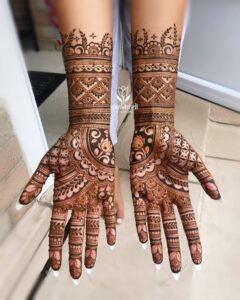
Mandala mehndi remains a beautiful choice for brides who appreciate symmetry and clean structure. A central mandala can become the focal point of the palm, surrounded by delicate petals, dots, vines, or geometric borders. For an engagement ceremony, you do not necessarily need the dense layers traditionally associated with full bridal mandalas. A larger central design with open areas around it can create a contemporary appearance. Geometric details can also introduce a more fashion-forward mood through diamonds, grids, fine lines, triangular shapes, and structured borders. Modern 2026 mehndi trends include geometric grids alongside classic floral and paisley motifs, giving traditional henna a more contemporary character. The beauty of geometric mehndi lies in precision. Clean lines and consistent spacing make the design look polished, especially in close-up photography. You can soften the geometry by adding small flowers or leaves, or keep it completely modern with repeated patterns. If your engagement outfit has geometric embroidery, mirror work, or structured jewellery, this style can create a subtle visual connection between your mehndi and your overall look.
Floral Trails and Negative Space
Floral trails are perfect when you want your engagement mehndi to feel feminine, graceful, and light. Rather than placing flowers everywhere, the artist creates a flowing path that moves naturally across the hand. Large flowers can be connected with thin vines, leaves, buds, and tiny dots while generous areas of skin remain untouched. This combination of artwork and empty space is often what gives modern mehndi its fashionable quality. Current bridal trend coverage repeatedly highlights negative space as an important feature of contemporary mehndi because it prevents the artwork from appearing too dense and allows individual motifs to stand out. Floral trails also photograph beautifully because the eye naturally follows the movement of the pattern. You can place a trail diagonally from the wrist toward the index finger, create a gentle curve across the back of the hand, or build a central floral arrangement around your ring. If you love flowers but do not want an overly traditional bridal design, this may be your sweet spot. Roses, lotus flowers, daisies, jasmine-inspired motifs, and leafy vines can all be adapted to create different personalities, from romantic and delicate to bold and dramatic.
How to Choose the Right Engagement Mehndi
Choosing a design from hundreds of beautiful references can feel surprisingly difficult. Everything looks good on Pinterest or Instagram, but the design that looks perfect on someone else’s hand may not suit your outfit, jewellery, hand shape, ceremony, or personal style. Start by deciding how much coverage you actually want. Do you prefer minimal, half-hand, wrist-to-finger, or more detailed coverage? Next, consider the mood of the event. A daytime garden engagement may call for delicate florals and open space, while a glamorous evening ceremony may suit bold Arabic flowers or jewellery-inspired patterns. Your outfit should also influence the choice. If your lehenga or saree already has heavy embroidery, a cleaner mehndi design can create balance; if the outfit is relatively simple, richer henna can become an attractive statement element. Modern bridal styling increasingly celebrates individuality, with brides choosing distinct aesthetics for different wedding celebrations rather than following one uniform look. The most important thing is to communicate clearly with your mehndi artist. Show reference images, explain what you like and dislike, and ask the artist to adapt the concept rather than blindly copy it.
Match Mehndi With Your Outfit
Your engagement outfit and mehndi should look like they belong in the same visual story. This does not mean matching every detail exactly; instead, look for complementary shapes, textures, and levels of detail. A pastel outfit with delicate embroidery can look beautiful with soft floral mehndi, while a heavily embellished lehenga may pair well with a more open Arabic design that prevents the overall look from becoming too busy. Current 2026 bridal fashion is embracing both understated neutrals and expressive jewel tones, giving brides plenty of room to create contrasting or coordinated looks. You can also take inspiration from embroidery. If your blouse has floral motifs, consider echoing those shapes in your henna. If your jewellery features geometric forms, introduce subtle geometric borders into the mehndi. The trick is not to make everything identical. Imagine putting together an outfit like a song: your dress is the main melody, jewellery provides the rhythm, makeup adds texture, and mehndi becomes a beautiful supporting note. When all the elements work together without competing for attention, your engagement look feels effortless. Before finalizing your design, take a photograph of your outfit and jewellery and discuss it with your artist so they can adjust the scale and placement accordingly.
Consider Your Jewellery and Ring
Jewellery is one of the biggest factors to consider when selecting engagement mehndi. Your ring deserves special attention because it will naturally attract attention during the ceremony and in photographs. If you are wearing a large statement ring, dense fingertip mehndi may make the area look visually crowded. In that case, leaving part of the ring finger open can create a clean frame around the jewellery. If your ring is delicate, you can afford to use more detailed patterns around it without overwhelming the overall appearance. Bracelets and bangles also matter because wrist cuffs in mehndi can either complement them or compete with them. Jewellery-inspired mehndi is currently another popular direction, with patterns designed to resemble bracelets, rings, chains, and ornamental cuffs. This can be particularly beautiful for a modern engagement because the henna itself becomes part of your accessory styling. Try placing a delicate bracelet motif around the wrist and connecting it to a floral trail on the hand. The result can look like jewellery flowing naturally into henna. When you look at your complete outfit in the mirror, ask one simple question: does each element have enough space to be appreciated? If the answer is yes, your styling is probably on the right track.
Tips for a Beautiful and Long-Lasting Mehndi
Beautiful engagement mehndi is not only about choosing the right design; application and aftercare also influence the final appearance. Start by selecting an experienced mehndi artist who can create clean lines, balanced spacing, and consistent detailing. If you have a reference image, discuss how much of it you want to retain and what should be customized. On the day of application, make sure your hands are clean and free from heavy creams, oils, or products that may interfere with the paste’s contact with the skin. Give the design enough time to dry and follow your artist’s recommended aftercare routine. Avoid treating the mehndi as though it were ordinary temporary makeup; the stain develops over time, so the color you see immediately after removing the paste is not the final result. Many bridal mehndi guides also recommend planning application timing carefully, particularly when brides want a deeper stain for photography and the ceremony. Most importantly, avoid experimenting with unknown or potentially unsafe products simply to achieve an instant dark color. A professional artist and good-quality henna are much better choices. Remember, your engagement day should be enjoyable, not a race against the clock. Give yourself enough time to sit comfortably, let the design develop properly, and still have time for makeup, dressing, photographs, and the ceremony.
Application and Aftercare Tips
A little preparation can make your mehndi experience much easier. Before the artist begins, remove rings and unnecessary jewellery so the hands remain accessible and the design can be applied evenly. Keep your hands relaxed while the artist works, because sudden movement can affect fine details. Once the paste has been applied, allow it to dry naturally and follow the artist’s instructions regarding when to remove it. Do not judge the stain immediately after paste removal; natural henna typically starts lighter and develops deeper over the following period. Avoid rushing to wash the area unnecessarily. Your artist may recommend keeping the design dry for a suitable period and avoiding activities that could rub away the developing stain. It is also smart to schedule your appointment according to your engagement timeline rather than squeezing it between multiple last-minute tasks. If your ceremony begins in the evening, an earlier application may give you enough time for the design to settle while keeping your schedule comfortable. Professional engagement mehndi services often emphasize fresh paste, clean application, sharp detailing, and photo-ready results because close-up hand photographs reveal every detail. A calm application session is ultimately better than a rushed one. When your artist has enough time to work carefully, the design has a much better chance of looking balanced, crisp, and elegant.
Engagement Mehndi vs. Wedding Mehndi
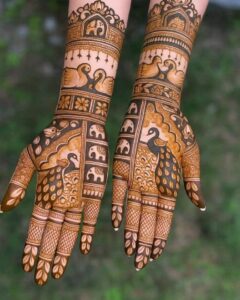
Engagement mehndi and wedding mehndi share the same beautiful cultural foundation, but they do not have to look alike. Wedding mehndi traditionally tends to be more elaborate, often covering the palms, fingers, wrists, arms, and sometimes the feet with detailed motifs and storytelling scenes. Engagement mehndi usually offers more flexibility because the bride may want a lighter, faster, and more contemporary design that complements the ring ceremony. Some current wedding guides describe engagement styles as front-hand-focused designs with lighter back hands and application times that can be considerably shorter than full bridal mehndi. This difference is useful because it allows the bride to create two separate visual identities for two important celebrations. You might choose a minimalist floral or Arabic design for the engagement and save a traditional full-hand bridal design for the wedding. Alternatively, you can keep a common motif—such as a particular flower, mandala, or paisley—across both occasions to create continuity. There is no requirement that engagement mehndi must be extremely simple, either. If you love detailed work, you can absolutely choose an intricate design. The key difference is intention. Wedding mehndi often celebrates the complete bridal story, while engagement mehndi can focus on romance, elegance, the ring, and the beginning of the journey. Choosing a lighter design does not make the occasion less traditional; it simply gives the celebration its own personality.
Conclusion
The best engagement mehndi design for modern brides is not necessarily the most complicated one. It is the design that feels connected to your personality, outfit, jewellery, ring, and the atmosphere of your celebration. In 2026, trends are moving toward thoughtful personalization, negative space, Arabic florals, Indo-Arabic fusion, mandalas, geometric details, jewellery-inspired patterns, and meaningful symbols. These styles give brides the freedom to create something traditional enough to honor the occasion while remaining contemporary enough to feel fresh. If you prefer subtle beauty, choose a minimalist floral trail or a delicate wrist design. If you want something dramatic, explore Arabic florals or Indo-Arabic patterns. If your heart is all about romance, add initials, a date, or a tiny representation of your love story. And if the engagement ring is your main attraction, build the mehndi around it rather than hiding it. Your engagement is the beginning of a new chapter, and your mehndi can become one of the smallest yet most memorable details of that day. Choose a design that makes you look at your hands and smile—not just because it is trending, but because it tells a little piece of your story.