
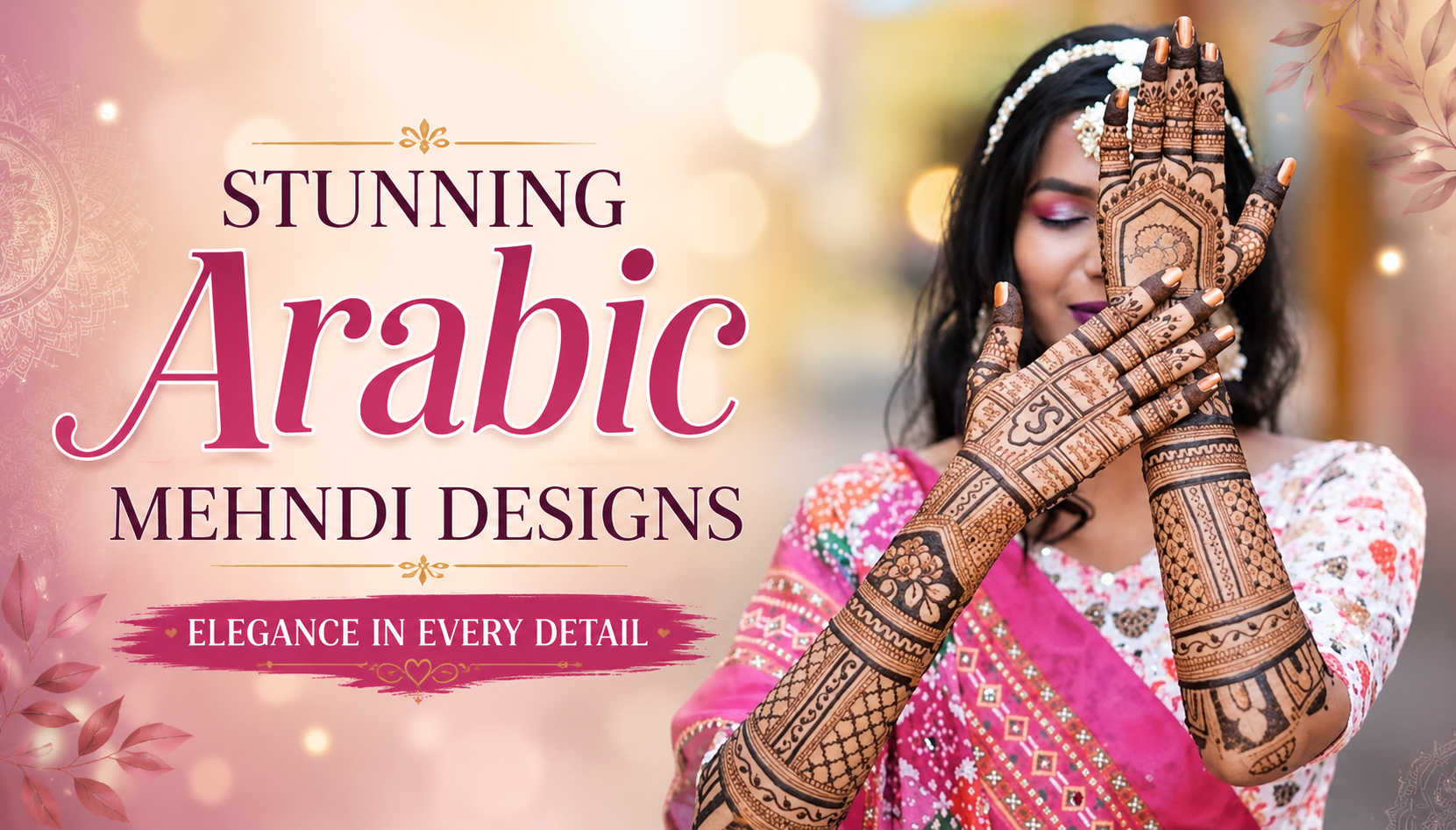
Mehndi, also known as henna art, has a special kind of beauty that never seems to go out of fashion. It can be delicate and understated, bold and dramatic, traditional and contemporary—all at the same time. For generations, people have decorated their hands and feet with flowing vines, flowers, paisleys, geometric patterns, and symbolic motifs during weddings, festivals, family gatherings, and other celebrations. What makes mehndi designs particularly fascinating is that they are temporary, yet the memories connected with them can last for years. A bride may remember the hours spent with her family while her bridal mehndi was being applied, while someone attending a festival may associate a simple floral pattern with laughter, music, and celebration. Mehndi is therefore much more than decoration. It is an artistic language that connects beauty with emotion, culture, creativity, and personal identity. Today, this traditional art is also finding a place in modern fashion, where artists combine classic motifs with minimalist compositions, negative space, fine lines, and personalized details. The result is a beautiful meeting point between heritage and contemporary design.
The Timeless Beauty and Cultural Meaning of Mehndi
The appeal of mehndi comes partly from its ability to transform ordinary skin into a temporary canvas. Traditionally, henna has been closely associated with celebrations, joy, auspicious occasions, and social gatherings across several cultures. It is especially prominent around weddings and festivals, where the application itself can become an important part of the celebration. Friends and relatives often gather around the person receiving mehndi, turning the process into a social experience rather than simply a beauty appointment. Traditional compositions commonly include floral motifs, paisleys, leaves, vines, circles, peacocks, and geometric elements, with artists arranging these details into flowing patterns. The symbolism can vary by culture, family, region, and individual interpretation, so a mehndi design does not have one universal meaning. Its emotional value often comes from the occasion and the people involved as much as from the actual pattern.
What makes mehndi particularly timeless is its flexibility. A centuries-old motif can be drawn in a highly traditional way, or an artist can simplify it until it looks completely modern. Think of mehndi as a classic piece of music that can be performed in different styles: the original character remains recognizable, but the interpretation can change with the artist. This is why traditional Indian mehndi designs, Arabic-inspired patterns, minimalist henna, and contemporary geometric compositions can all exist side by side. Modern artists have expanded the visual vocabulary of mehndi without necessarily abandoning its roots. Social media has also made it easier for artists and enthusiasts to discover patterns from different regions and experiment with new combinations. The result is a constantly evolving art form in which heritage provides the foundation and creativity builds something new on top of it.
Why Mehndi Continues to Inspire Generations
Mehndi continues to attract people because it offers something that many permanent forms of body art cannot: the freedom to change. You can choose an elaborate bridal design for one important occasion, a small floral pattern for a festival, or a tiny geometric motif simply because you like the way it looks. The temporary nature of henna allows people to experiment with different styles without committing to a permanent image. That makes it especially appealing to people who enjoy fashion and creativity but want their appearance to evolve with different occasions. A design can also be coordinated with clothing, jewelry, hairstyle, or the overall theme of an event, making mehndi feel like another fashion accessory. At the same time, the handmade quality gives every application a unique personality.
There is also a strong emotional dimension to the art. A mehndi session can create a moment of relaxation before a busy celebration, and it often gives family members and friends an opportunity to spend time together. For a bride, the experience can become part of the wedding story itself, from choosing the motifs to watching the artist gradually fill the hands with intricate details. For someone getting a simple design, the process can be equally enjoyable because it provides a creative break from everyday routines. The appeal is therefore not limited to the final stain. The anticipation, artistic process, conversation, and memories surrounding the application all contribute to the experience. This combination of visual beauty and emotional connection helps explain why mehndi remains relevant even as fashion trends continue to change.
From Celebration Ritual to Creative Expression
The modern mehndi artist is not simply reproducing old patterns. Many artists approach the hand like a designer approaches a blank page, considering balance, movement, spacing, scale, and visual rhythm before making the first line. A design may begin with one central motif and gradually branch into flowers, leaves, dots, curves, or geometric details. Another design may deliberately leave large areas uncovered so that the skin itself becomes part of the composition. This design thinking has helped mehndi move beyond traditional ceremonial use and become a form of creative self-expression. Someone who loves bold artwork may choose a dense composition, while someone with a minimalist personality may prefer a few graceful lines across the fingers and wrist.
The creative possibilities are almost endless because the basic language of mehndi can be rearranged in countless ways. A traditional paisley can become the center of a contemporary bracelet design, while a floral vine can be reduced to a few fine lines for a minimalist appearance. Initials, dates, stars, moons, favorite flowers, cultural symbols, and other meaningful elements can also be integrated into a design. This personalization makes each piece feel less like a template and more like wearable artwork. The strongest modern mehndi designs often achieve this balance beautifully: they respect recognizable traditional forms while giving the wearer enough space to express an individual identity.
Traditional Mehndi Designs and Their Signature Elements
Traditional mehndi is known for richness, detail, and a sense of visual abundance. A classic design may cover much of the hand, connecting the palm to the fingers through a continuous network of motifs. Instead of treating every part of the skin as a separate section, skilled artists often create a visual flow that guides the eye from one element to another. Paisleys, flowers, leaves, vines, mandalas, peacocks, and fine lattice patterns are among the most recognizable components. The exact arrangement can differ dramatically depending on regional traditions and the artist’s personal style. Some designs are symmetrical and highly structured, while others deliberately create an organic, flowing appearance.
Paisleys are particularly versatile because their curved shape works naturally with the contours of the hand. Floral motifs can soften a design, while leaves and vines help connect larger elements and create movement. Mandalas introduce circular balance and can serve as a focal point in the center of the palm or on the back of the hand. Peacock motifs are frequently used when the artist wants a more elaborate decorative centerpiece. When these components are combined thoughtfully, even a highly detailed design can remain visually organized rather than appearing crowded. This is one reason experienced mehndi artists spend so much time thinking about composition rather than simply filling available space.
Paisleys, Flowers, Vines, and Leaves
The beauty of traditional motifs lies in their ability to work individually or as part of a larger composition. A single paisley can look elegant on a finger or wrist, but several paisleys can be linked with vines to create a much more elaborate pattern. Flowers provide another flexible element, ranging from tiny blossoms used as fillers to large decorative blooms that dominate a section of the design. Leaves can be used around flowers to create a natural appearance, while curved vines help connect separate motifs into one flowing artwork. These components are simple enough to recognize but versatile enough to be interpreted in countless styles.
When an artist combines these motifs, spacing becomes just as important as the drawing itself. Too many details placed close together can make a pattern difficult to read, while excessive empty space may make a traditional design feel unfinished. The most attractive compositions usually create a rhythm between dense sections and lighter areas. This principle is particularly important for bridal mehndi because the design may cover a large surface area while still needing to look elegant from a distance. A good artist understands how individual motifs behave as part of the whole picture, creating a design that feels balanced rather than randomly assembled.
Mandalas and Peacock Motifs
Mandalas bring a natural sense of order to mehndi because their circular structure creates an obvious center and radiating pattern. A mandala can be tiny and delicate or large and highly detailed, depending on the occasion and the wearer’s preference. Contemporary artists often simplify traditional mandalas by using clean outlines, open spaces, and fewer decorative layers. This makes them particularly suitable for people who want a traditional reference without the density associated with some bridal patterns. A mandala can also work beautifully with bracelets, finger designs, floral borders, or geometric elements.
Peacock motifs bring a different quality to mehndi. Their curved body, decorative feathers, and elegant posture give artists an opportunity to create a visually dramatic focal point. In traditional compositions, a pair of peacocks may face each other or be surrounded by flowers and vines, while contemporary designs may use only a simplified peacock silhouette. The motif works particularly well on larger areas of the hand or forearm where there is enough room to show its shape clearly. Whether highly detailed or minimalist, the peacock remains one of the most recognizable decorative inspirations in mehndi art.
Bridal Mehndi: Where Tradition Meets Storytelling
Bridal mehndi designs are often the most elaborate examples of this art form because they can cover extensive areas of the hands and feet and incorporate highly personalized details. A bridal design may include traditional flowers, paisleys, mandalas, vines, peacocks, and intricate fillers, but it can also include elements connected specifically to the couple. Names, initials, important dates, symbolic objects, wedding scenes, or small representations of meaningful moments can be woven into the artwork. This transforms the design from a beautiful pattern into a visual record of the celebration. Instead of simply decorating the bride’s hands, the artist can create a composition that tells a story.
The storytelling aspect is one of the most exciting parts of bridal mehndi. Imagine looking at a bride’s hands and discovering tiny details that mean something to her and her partner. One section might represent their first meeting, another might feature a favorite flower, and another could contain initials hidden among the vines. These details encourage guests to look closely and give the bride a personal connection with the artwork. Because bridal mehndi can take considerable time, planning is essential. The bride and artist should discuss the preferred level of detail, coverage, motifs, and personalization before the application begins.
Personalized Bridal Details
Personalization can make a bridal design dramatically more memorable, but it works best when it is integrated naturally rather than simply added as an afterthought. An artist can hide initials inside a floral motif, place a date within a decorative border, or use symbolic imagery as part of a larger composition. This approach allows the meaningful details to blend into the artwork instead of interrupting its visual flow. The bride can also decide whether she wants a symmetrical design or something more organic and varied. Some people prefer extensive coverage from the fingertips to the forearms, while others want the design to remain focused on selected areas.
The key is to remember that bridal mehndi should reflect the bride’s personality. A person who loves traditional artwork may feel happiest with a richly detailed composition, while someone with a modern aesthetic may prefer a combination of classic motifs and open negative space. There is no single definition of the perfect bridal mehndi design. The best choice is the one that feels meaningful, comfortable, visually appealing, and appropriate for the celebration. After all, the design will appear in photographs, videos, family memories, and personal moments long after the ceremony itself.
Modern Mehndi Designs for a Contemporary Look
Modern mehndi has introduced a fresh visual language that often emphasizes simplicity, clean lines, asymmetry, and strategic use of empty space. Instead of covering the entire hand, a contemporary design might focus on the wrist, fingers, back of the hand, or a narrow line extending toward the forearm. This approach is especially popular among people who want mehndi to function almost like delicate jewelry. A bracelet-style design can circle the wrist, while finger-focused patterns can create a ring-like or lace-like effect. Fine-line techniques can make the artwork appear light and sophisticated without requiring extensive coverage.
Minimalism does not necessarily mean boring. In fact, working with fewer elements can require even greater precision because every line becomes visible. A small floral arrangement with carefully controlled spacing can look more sophisticated than a crowded composition. Modern artists also experiment with geometric shapes, grids, dots, arches, abstract curves, and contemporary mandalas. These designs demonstrate how mehndi can adapt to current fashion while retaining its recognizable handmade character. The goal is not to replace traditional mehndi but to reinterpret it for people whose tastes lean toward cleaner and more contemporary aesthetics.
Minimalism, Fine Lines, and Negative Space
Negative space is one of the defining features of contemporary mehndi. Instead of treating uncovered skin as an empty area that needs to be filled, modern artists intentionally use it as part of the design. The contrast between stained and unstained skin can make individual motifs stand out more clearly. This creates a lighter visual effect that works particularly well with modern outfits and understated jewelry. A simple vine across the back of the hand, for example, can look incredibly elegant when surrounded by carefully planned open space.
Fine-line mehndi requires control and consistency. The artist needs to maintain a steady hand while creating delicate outlines, tiny details, and smooth curves. Small imperfections can become noticeable when there are only a few elements in the composition. This is why choosing an artist whose portfolio matches the desired style is important. Someone known for heavy traditional bridal work may have a different approach from an artist who specializes in minimalist designs. Looking at previous examples can help ensure that the final result matches the expected aesthetic.
Arabic-Inspired and Bracelet-Style Designs
Arabic-inspired mehndi is often recognized for its flowing floral vines, larger motifs, and strategically spaced composition. Compared with some dense traditional styles, these designs can feel more open and dramatic because the main elements are allowed to breathe. Large flowers, leaves, and sweeping vines can travel diagonally across the hand or extend toward the wrist and forearm. This makes Arabic-inspired patterns particularly attractive to people who want an elegant design without complete coverage.
Bracelet-style mehndi takes inspiration from jewelry and places decorative patterns around the wrist. It can include chains, flowers, geometric details, dots, or bands that visually resemble bracelets and cuffs. The style is easy to customize and can be made delicate or bold depending on the wearer’s preference. It also pairs naturally with modern fashion because the design can function as a temporary accessory. Together, Arabic-inspired and bracelet-style approaches show how mehndi can borrow ideas from fashion design while maintaining the artistic character of hand-drawn henna.
Mehndi Designs for Every Occasion
One of the greatest strengths of mehndi is its versatility. You do not need to be a bride to enjoy beautiful henna art. A wedding guest might choose a medium-sized floral pattern, someone attending a festival may select a traditional palm design, and a person going to a party may prefer a contemporary geometric arrangement. For casual use, tiny motifs on the fingers or wrist can provide a stylish touch without overwhelming an everyday outfit. The design can also be adapted to the amount of time available, which makes mehndi suitable for both quick applications and elaborate sessions.
Different occasions naturally invite different levels of detail. Bridal celebrations may call for extensive coverage and storytelling, while a festival may be better suited to a balanced design that can be applied relatively quickly. For parties, modern compositions with negative space can create a fashionable appearance, particularly when coordinated with accessories. Even everyday mehndi can become a form of self-expression when someone chooses a favorite symbol or small floral pattern simply because it makes them happy. The art is flexible enough to fit almost any mood or setting.
Weddings, Festivals, Parties, and Everyday Style
Weddings remain one of the strongest settings for elaborate mehndi because the art is deeply connected with celebration and ceremonial beauty in many communities. Festival mehndi tends to be more flexible, allowing people of different ages to choose designs ranging from simple dots and flowers to detailed traditional patterns. Parties provide an opportunity to experiment with fashion-forward styles, including geometric shapes, fine lines, and asymmetrical compositions. Everyday mehndi usually works best when the design is smaller, practical, and easy to coordinate with different outfits.
The growing popularity of minimalist designs has made mehndi especially suitable for everyday fashion. A small crescent, floral vine, mandala, or geometric pattern can add personality without looking overly formal. It can be paired with traditional clothing, Western outfits, workwear, or casual clothes depending on the design. This versatility is one reason mehndi has moved beyond being seen only as ceremonial decoration. It can now function much like jewelry: something chosen according to mood, outfit, occasion, and personal taste.
How to Choose the Perfect Mehndi Design
Choosing the right design starts with understanding your own preferences. Ask yourself whether you prefer detailed or minimal artwork, traditional or contemporary motifs, dense coverage or open space, and symmetrical or asymmetrical compositions. Your answers can quickly narrow down the enormous number of available mehndi design ideas. The occasion should also influence the decision because a bridal design may require a very different level of detail from a casual festival pattern. It is also useful to consider the placement of the design because the same motif can look completely different on the palm, back of the hand, fingers, wrist, or forearm.
Your outfit and jewelry can provide additional inspiration. A heavily embroidered traditional outfit may pair beautifully with an intricate design, while a simple contemporary outfit may look better with clean lines and negative space. Skin coverage is another practical consideration, particularly if you need to use your hands soon after application. Detailed designs take longer to apply and may require more patience during the drying and stain-development process. Planning ahead makes the experience more enjoyable and gives the artist enough time to create the intended composition without rushing.
Matching the Design With Your Personality and Outfit
Your mehndi should feel like something you chose rather than something that simply happened to be popular. If you enjoy classic aesthetics, traditional paisleys, flowers, mandalas, and peacocks may feel natural. If you prefer understated fashion, a minimalist floral vine or geometric bracelet may be more appropriate. Someone who loves symbolism can incorporate initials, dates, celestial motifs, favorite flowers, or other meaningful imagery. This personal approach can turn a standard design into something much more memorable.
It is also helpful to consider photography. If you are attending a major event, your mehndi may appear in close-up photographs, so details should be intentional and well balanced. Large motifs can provide visual impact in photographs, while fine details create interest when viewed closely. The best design therefore works at two distances: it has a clear overall silhouette and rewarding details for anyone who looks closer. This is where good composition makes a real difference.
The Creativity and Skill Behind Mehndi Art
Creating beautiful mehndi is a genuine artistic skill. The artist controls a cone or applicator to produce lines, curves, dots, shading, and decorative details, often without the assistance of a stencil. Pressure, speed, hand position, and consistency all influence the final result. A slight change in pressure can make a line thicker or thinner, while a small change in angle can affect the curve of a motif. Repeating these movements accurately across a large design requires patience and practice.
The handmade nature of mehndi is part of its charm. Two artists can look at the same reference photograph and create noticeably different results because each person interprets shapes and spacing differently. Experienced artists develop recognizable signatures through their preferred flowers, fillers, line work, and composition. Some specialize in dense bridal designs, while others excel at minimalism or contemporary patterns. This diversity is valuable because it gives clients the opportunity to choose an artist whose visual language matches their own taste.
Why Technique, Precision, and Practice Matter
Precision becomes particularly important when working with intricate patterns. Traditional bridal designs may contain hundreds or even thousands of small visual decisions, from the direction of a vine to the placement of a tiny dot. If the spacing becomes inconsistent, the overall composition can lose its rhythm. Artists therefore rely on practice to develop muscle memory and improve their ability to draw smoothly on different parts of the body. Hands are especially challenging because they have curves, joints, fingers, and changing surfaces.
A skilled artist also understands when to stop adding details. More decoration does not automatically mean better design. Sometimes the most effective decision is to leave an area open so that an important motif has room to stand out. This understanding of restraint separates thoughtful composition from simple pattern filling. Whether the final design is traditional or modern, balance remains one of the most important principles of beautiful mehndi.
Mehndi as a Modern Form of Self-Expression
Modern mehndi gives people a chance to communicate something about themselves through temporary artwork. A design can represent cultural heritage, a favorite aesthetic, an important memory, or simply a love of decorative art. Some people choose meaningful symbols, while others select patterns purely because they enjoy their visual appearance. There is no requirement for every motif to have a deep symbolic meaning. Sometimes a beautiful flower is simply a beautiful flower.
Personalization has become especially important as people discover more ways to adapt mehndi to their own identities and styles. Instead of selecting a complete design from a catalog, a person can combine elements from different references and ask the artist to create an original composition. This collaborative process makes the application feel more creative. The wearer becomes part of the design process rather than simply choosing a finished template.
Personalization, Symbols, and Meaningful Details
Small details can carry considerable emotional value. Initials can represent a relationship, a date can commemorate an important occasion, and a favorite flower can reflect someone’s personality. Even abstract shapes can become meaningful when connected to personal memories. The challenge is to incorporate these details without making the overall design feel forced. An experienced artist can hide small elements inside larger motifs so that the final artwork remains cohesive.
This balance between meaning and aesthetics is one of the strongest characteristics of modern mehndi. The design can look beautiful to someone who knows nothing about its story while carrying a completely different significance for the person wearing it. That dual quality makes mehndi especially powerful as personal art. It can be decorative on the surface and deeply meaningful underneath.
Tips for Getting Beautiful and Safer Mehndi
Getting a beautiful result begins before the first line is drawn. Choose an artist whose portfolio demonstrates the style you actually want, discuss the approximate size and coverage in advance, and keep a reference image available if you have a specific concept in mind. Give yourself enough time for the application rather than scheduling it immediately before an important event. Follow the artist’s care instructions for the particular product being used, and avoid treating extremely dark or unusually fast-developing stains as automatically better. Natural henna typically produces brown, orange-brown, or reddish-brown tones, while products marketed as “black henna” can contain additional ingredients.
Safety deserves special attention because not every product sold as henna is simply natural henna. The U.S. Food and Drug Administration warns that products marketed as black henna may contain p-phenylenediamine (PPD), a hair-dye ingredient associated with potentially serious skin reactions. FDA also states that henna is approved in the United States as a hair dye, not for direct application to the skin, and reports of adverse reactions have occurred with products marketed as both henna and black henna. This means consumers should ask what product is being used, avoid products containing inappropriate skin dyes, and take unexpected irritation seriously. Ingredient labeling can also help when products are sold commercially, although professional-use products may have different labeling circumstances.
If a product causes burning, swelling, severe itching, blistering, or another concerning reaction, stop using it and seek appropriate medical advice rather than trying to cover the reaction with additional cosmetic products. PPD is particularly important to recognize because previous exposure can contribute to sensitization and future allergic reactions. Choosing a reputable artist and asking questions about the product is therefore part of getting good mehndi, not an unnecessary extra step. Beautiful artwork should never come at the expense of basic skin safety.
The Future of Mehndi Art
The future of mehndi looks increasingly experimental because artists have access to a global pool of inspiration. A traditional floral motif can now be combined with geometric patterns, contemporary illustration, minimalist line work, or jewelry-inspired compositions. Artists share their work online, clients discover styles from different regions, and new ideas spread rapidly between communities. This exchange encourages experimentation while also creating opportunities to rediscover older techniques. The result is not a simple movement from traditional to modern; instead, both approaches continue to influence each other.
Technology is also changing how people choose designs. Digital mood boards, social media portfolios, design collections, and customized references make it easier for clients to communicate what they want before an appointment. Yet the actual application remains wonderfully human. A digital reference can provide inspiration, but the final lines are still created by an artist’s hand. That combination of technology for inspiration and traditional craftsmanship for execution is likely to remain a defining feature of modern mehndi.
The most exciting future may therefore be one where there is no strict boundary between traditional and contemporary mehndi. A bride may choose a classic paisley composition with a minimalist wrist section. A festival design may combine a mandala with geometric negative space. Someone wearing a modern outfit may select a centuries-old floral motif drawn with contemporary fine-line techniques. These combinations prove that cultural traditions do not have to remain frozen in time to remain meaningful. They can grow, adapt, and find new audiences while preserving the visual language that made them special in the first place.
Conclusion
Mehndi Magic: Traditional Art with a Modern Touch represents more than a collection of beautiful patterns. It reflects the remarkable ability of an artistic tradition to evolve while maintaining its emotional and cultural character. From detailed bridal mehndi filled with flowers, paisleys, peacocks, and personal stories to minimalist designs built around fine lines and negative space, there is a style for almost every personality and occasion. The handmade quality of mehndi gives every design individuality, while personalization allows the wearer to turn a familiar motif into something deeply personal.